Mobile App vs. Mobile Website: Which Does Your Business Actually Need?
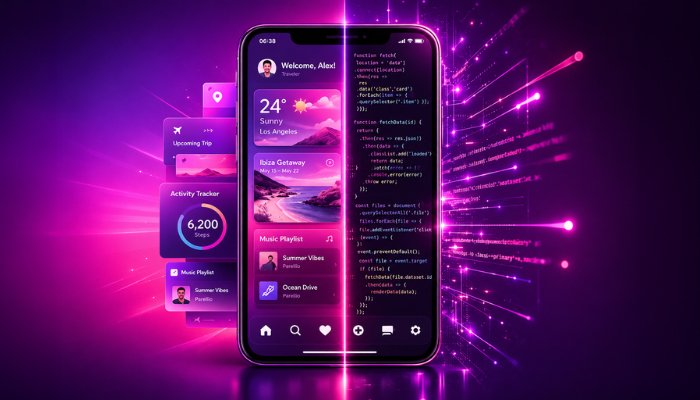
In today's digital economy, one question continues to dominate boardrooms, startup discussions, and brand strategy meetings:
"Should we build a mobile app or invest in a mobile website?"
For many businesses, the answer is often clouded by hype, trends, or the pressure to "have an app because competitors do." But the reality is far more strategic than that.
At TELIVUS MEDIA, we believe this decision should never be driven by vanity. It should be driven by:
- Customer behaviour
- Business objectives
- User retention models
- Revenue architecture
- Scalability requirements
- Brand experience goals
Because in 2026, digital infrastructure is no longer optional. It is the operational engine of business growth.
And choosing the wrong platform can quietly drain budgets, reduce conversions, and create friction between your brand and your audience.
The Real Question Isn't "App or Website?"
The real question is: How does your audience want to interact with your business?
That changes everything.
Some businesses need:
- Instant accessibility
- Search visibility
- Faster lead generation
- Lower development costs
Others require:
- Deep customer retention
- Personalized experiences
- Push notifications
- Offline functionality
- Habit-forming engagement
This is where the difference between a mobile website and a mobile application becomes critically important.
Understanding the Difference
What Is a Mobile Website?
A mobile website is a responsive digital platform accessed through a browser.
It adapts to smartphones and tablets while remaining accessible through:
- Google Search
- Social media links
- Ads
- QR codes
- Direct traffic
A mobile website is designed for:
- Accessibility
- Information discovery
- SEO visibility
- Lead generation
- Faster onboarding
It works instantly without requiring downloads.
What Is a Mobile App?
A mobile application is software installed directly onto a user's device.
Apps are built for:
- Personalised user experiences
- High engagement
- Repeat usage
- Feature-rich interactions
- Loyalty ecosystems
Unlike websites, apps create a more immersive digital environment.
But they also demand:
- Higher investment
- Ongoing updates
- Platform maintenance
- User acquisition strategies
And most importantly: a valid reason for users to keep them installed.
The Biggest Mistake Businesses Make
One of the most expensive mistakes businesses make is building an app before validating customer behaviour.
At TELIVUS MEDIA, we've seen brands invest heavily in applications only to realise:
- Users don't return
- Download rates remain low
- Engagement drops after week one
- Customer acquisition costs become unsustainable
Why? Because not every business needs an app. And not every customer wants one.
In fact, many businesses would generate significantly higher ROI by investing first in:
- High-converting mobile websites
- SEO infrastructure
- Landing page ecosystems
- Conversion funnels
- Performance marketing
- Speed optimization
- Mobile UX strategy
Instead of immediately jumping into app development.
When Your Business Actually Needs a Mobile Website
A mobile website is often the smarter first investment when your goal is:
1. Lead Generation
If your business depends on:
- Form submissions
- Discovery traffic
- SEO
- Google visibility
- Service inquiries
A website is essential.
Apps are not indexed like websites. Meaning they cannot compete in organic search visibility the same way.
2. Faster Customer Acquisition
Users can visit a website instantly.
No:
- Download
- Installation
- Storage permissions
- App-store friction
That reduction in friction dramatically improves conversion rates.
Especially for:
- Restaurants
- Real estate firms
- Clinics
- Educational institutions
- Agencies
- D2C startups
- Service-based businesses
3. Budget-Conscious Scaling
A mobile website is:
- Faster to deploy
- Easier to maintain
- More affordable
- Easier to update
For growing businesses, this creates agility. And agility wins markets.
4. SEO & Discoverability Matter
If customers search for:
- Your services
- Your products
- Your solutions
- Your expertise
You need search visibility.
A properly optimized mobile website becomes:
- A sales funnel
- A branding asset
- A trust engine
- A lead-generation machine
All working simultaneously.
When Your Business Actually Needs a Mobile App
A mobile app becomes valuable when engagement depth matters more than discovery.
1. You Need Repeat Daily Usage
Apps make sense when users interact frequently.
Examples include:
- Food delivery
- Banking
- Fitness platforms
- E-commerce loyalty systems
- Healthcare tracking
- Subscription ecosystems
- Productivity platforms
If customers use your platform weekly or daily, an app creates convenience and retention.
2. Personalisation Is Core to the Experience
Apps excel at:
- Behavioural personalization
- User dashboards
- AI recommendations
- Saved preferences
- Smart notifications
This increases customer lifetime value significantly.
3. Push Notifications Can Drive Revenue
One of the most powerful advantages of apps is direct communication.
Push notifications can:
- Recover abandoned carts
- Increase repeat purchases
- Trigger engagement
- Promote offers
- Build habit loops
But only when used strategically. Otherwise, they become uninstall triggers.
4. Offline Functionality Is Important
Apps can function even with limited connectivity.
This matters for:
- Travel
- Learning platforms
- Utility tools
- Internal enterprise systems
The Hidden Cost Nobody Talks About
Building an app is not the expensive part. Maintaining relevance is.
Businesses often underestimate:
- Update cycles
- UX improvements
- OS compatibility
- Security patches
- App-store compliance
- Retention campaigns
- User acquisition costs
An app without an engagement strategy becomes digital dead weight.
At TELIVUS MEDIA, we believe businesses should never build apps for perception.
They should build them for:
- Functionality
- Revenue efficiency
- Retention engineering
- Customer behaviour alignment
The Future Is Hybrid Ecosystems
In 2026, the smartest brands are not choosing between apps and websites. They are building connected ecosystems.
The modern digital architecture looks like this:
Mobile Website
Used for:
- Discovery
- SEO
- Awareness
- Traffic acquisition
- Lead conversion
Mobile App
Used for:
- Retention
- Loyalty
- Repeat purchases
- Personalization
- Engagement depth
Together, they create a full-funnel digital ecosystem.
What TELIVUS MEDIA Recommends
At TELIVUS MEDIA, we don't believe in selling unnecessary technology. We believe in building strategic digital infrastructure.
Our recommendation depends entirely on:
- Your business model
- User behaviour
- Revenue goals
- Market maturity
- Customer lifecycle
- Growth stage
But in most cases, we advise businesses to follow this progression:
Phase 1 — Build a High-Converting Mobile Website
Focus on:
- Speed
- SEO
- Conversion architecture
- User experience
- Lead generation
- Performance marketing integration
Phase 2 — Validate User Behaviour
Track:
- Returning visitors
- Session depth
- Purchase frequency
- Retention patterns
- Customer engagement
Phase 3 — Develop an App Only When Retention Justifies It
Once users demonstrate repeat engagement, an app becomes a scaling asset instead of a liability.
This approach:
- Reduces waste
- Improves ROI
- Validates demand
- Creates sustainable digital growth
Expert Perspective
The future does not belong to businesses with the most technology.
It belongs to businesses with the right digital architecture.
A mobile website creates accessibility. A mobile app creates retention.
One drives discovery. The other drives loyalty.
The real competitive advantage comes from understanding:
What your customers actually need — not what trends suggest you should build.
And that is exactly where TELIVUS MEDIA positions itself.
Not as a vendor. But as a strategic digital growth partner, helping brands build scalable, conversion-focused ecosystems designed for modern consumer behaviour.
Because in 2026, digital success is no longer about simply "being online."
It is about building systems that convert attention into trust, trust into engagement, and engagement into long-term business growth.