Branding as Infrastructure: The Foundation Every Growing Business Needs
Branding Is Not Decoration. It’s Operational Power.
Most businesses still treat branding like surface-level aesthetics.
A logo.
A colour palette.
A website redesign.
A social media feed.
But scalable businesses understand something far more important:
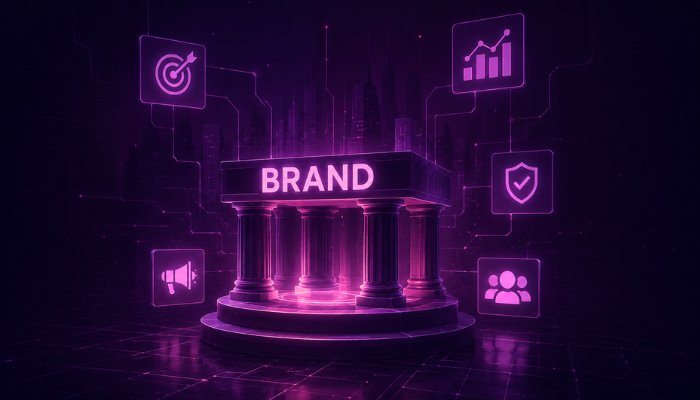
Branding is infrastructure.
It is the invisible system that influences perception, trust, pricing power, customer loyalty, hiring quality, investor confidence, sales efficiency, and long-term scalability.
At Telivus Media, we believe branding is not an optional creative exercise.
It is the operational backbone of business growth.
Because when branding is weak, growth becomes expensive, inconsistent, and fragile.
But when branding is built strategically, every department performs better.
The Biggest Branding Misconception in Business
Many companies assume branding begins and ends with “looking professional.”
That assumption is costing businesses millions.
True branding is not visual identity alone.
It is the structured perception architecture of a company.
Your branding defines:
- How customers emotionally interpret your business
- Why do people trust you over competitors
- Whether your pricing feels justified
- How quickly do sales conversations convert
- Whether marketing campaigns compound or disappear
- If your business feels scalable or temporary
Without a strong branding infrastructure, businesses rely heavily on discounts, aggressive ads, and constant outreach just to survive.
With strong branding infrastructure, businesses attract attention, build authority, and create demand organically.
That difference changes everything.
Branding Impacts Every Operational Layer
A strong brand is not isolated to marketing.
It influences every function inside a business.
1. Branding Improves Sales Efficiency
When positioning is clear, sales cycles shorten.
Customers understand:
- What you do
- Why you matter
- Why you are different
- Why your pricing makes sense
Without strong branding, sales teams spend most of their time explaining credibility.
With strong branding, credibility is already established before the conversation begins.
That is operational leverage.
2. Branding Reduces Customer Acquisition Costs
Performance marketing without branding becomes expensive over time.
Why?
Because customers don’t remember transactional advertising.
They remember emotional positioning.
Businesses with strong branding:
- Generate higher recall
- Improve conversion rates
- Increase repeat purchases
- Build stronger retention
- Create word-of-mouth momentum
Branding makes marketing more efficient because trust already exists before the click happens.
3. Branding Creates Pricing Power
Strong brands compete on value.
Weak brands compete on price.
If customers constantly negotiate pricing, the issue is often not the product.
It is positioning.
Luxury brands, premium service providers, and category leaders are not always the cheapest or even the best in terms of technical performance.
But they are perceived as more valuable.
And perception drives business decisions.
4. Branding Builds Internal Alignment
One of the most overlooked functions of branding is internal clarity.
A strong brand creates:
- Consistent communication
- Stronger company culture
- Better hiring alignment
- Clearer decision-making
- Unified market positioning
When employees understand what the company represents, execution becomes faster and more cohesive.
Branding becomes operational infrastructure internally—not just externally.
The Cost of Weak Branding
Businesses often notice branding problems too late.
Symptoms include:
- Inconsistent customer perception
- High ad dependency
- Poor retention
- Low engagement
- Weak authority
- Difficulty scaling
- Constant price sensitivity
- Confused messaging
- Lack of differentiation
Most businesses try to solve these problems with more advertising.
But advertising amplifies perception.
It does not fix broken positioning.
If the foundation is weak, scaling only increases inefficiency.
What Scalable Branding Actually Looks Like
Scalable branding is intentional.
It is built through:
- Strategic positioning
- Clear market differentiation
- Emotional storytelling
- Consistent communication systems
- Strong visual identity
- Audience psychology
- Trust architecture
- Brand experience consistency
At Telivus Media, branding is approached as a business growth system—not a design project.
Every brand element must support:
- Market authority
- Business scalability
- Emotional connection
- Conversion efficiency
- Long-term recall
Because growth is not sustained by attention alone.
It is sustained by perception.
Branding Is the Multiplier Behind Growth
The most successful businesses in the world understand one truth:
Products may attract customers once. Brands keep them coming back.
A strong brand:
- Makes marketing easier
- Makes sales faster
- Makes trust scalable
- Makes pricing stronger
- Makes growth sustainable
Branding is not the final layer of a business.
It is the foundation beneath every layer.
And businesses that recognise this early build an unfair advantage that compounds for years.
The Bottom Line
In today’s crowded market, visibility alone is no longer enough.
Businesses need memorability.
Authority.
Trust.
Emotional connection.
Consistency.
That is what branding infrastructure creates.
At Telivus Media, we help businesses move beyond aesthetics and build brands engineered for scale, influence, and long-term growth.
Because the businesses that dominate tomorrow are not simply the ones that market better.
They are the ones that are remembered better.